
Roof Leak Causes: Fixing Drip Problems in the East Midlands
Sam R.·Sep 23, 2026
Why East Midlands Roofs Struggle
Having spent 20 years climbing ladders across Derby, Nottingham, and Leicester, I've seen exactly what the local weather does to a house. It isn't just the heavy rain. It is the constant cycle of freezing and thawing that works its way into the smallest gaps.
Most homeowners don't notice a problem until they see a yellow stain on the bedroom ceiling. By then, the water has usually been getting in for weeks or even months. The reality is that a leak is rarely a sudden disaster. It is usually a slow process of wear and tear that finally reaches a breaking point.
Understanding why your roof is failing helps you make a better decision about the fix. You don't always need a full replacement. Often, it's about identifying a specific weak point that's been neglected.
The Problem With Slipped or Cracked Tiles
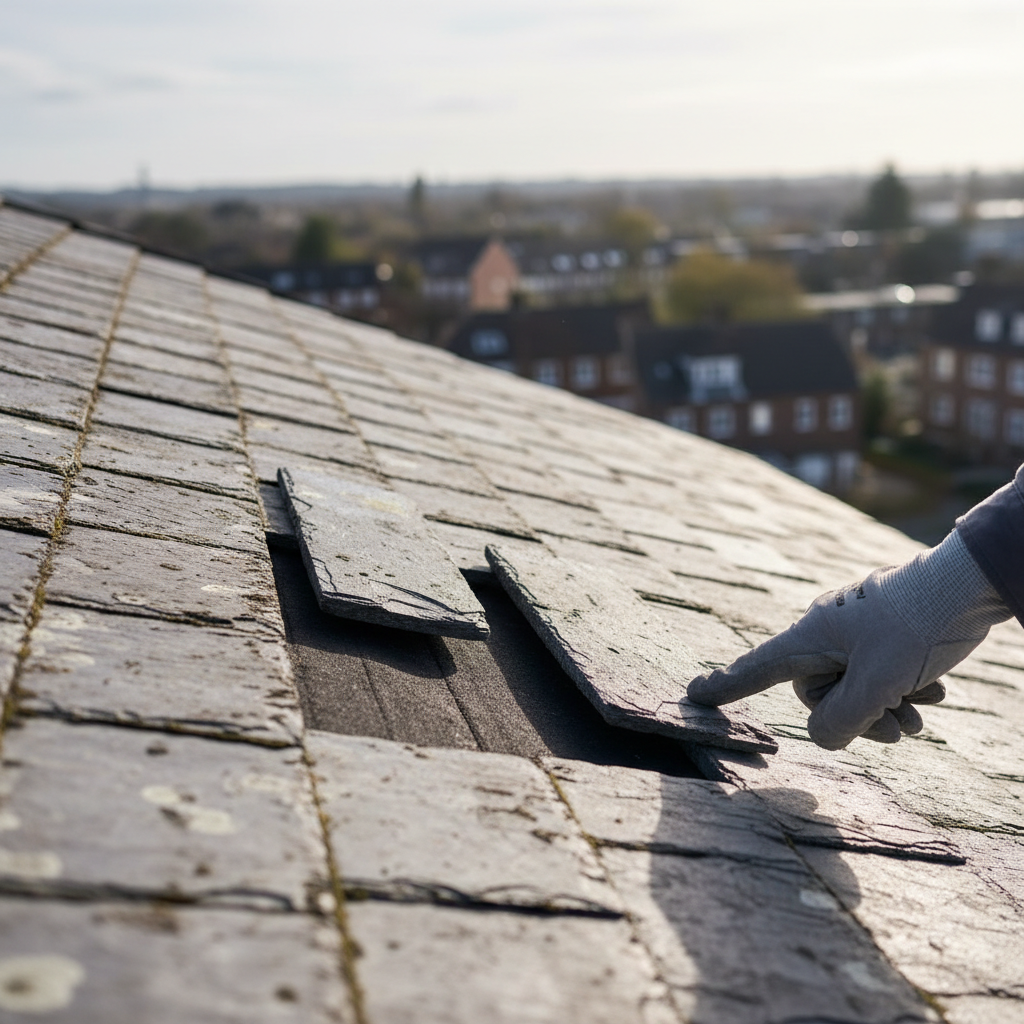
This is the most frequent issue we encounter. In our part of the country, high winds are common. A single loose nail or a bit of mortar decay can cause a tile to shift. Once that tile moves, the underlay is exposed to direct rain.
While the felt under your tiles is a secondary barrier, it isn't meant to be the primary waterproof layer for long. If the sun hits it, it becomes brittle. If water pools on it, it eventually rots through. We often find that a leak appearing in one spot is actually caused by a tile three feet higher up the roof. Water travels along the rafters before it finally drips onto your plasterboard.
Cracked tiles are just as bad. Even a hairline fracture can suck in water through capillary action. During winter, that water freezes and expands, making the crack wider. It's a slow cycle that ends with a damp patch in your loft.
Failing Chimney Flashings
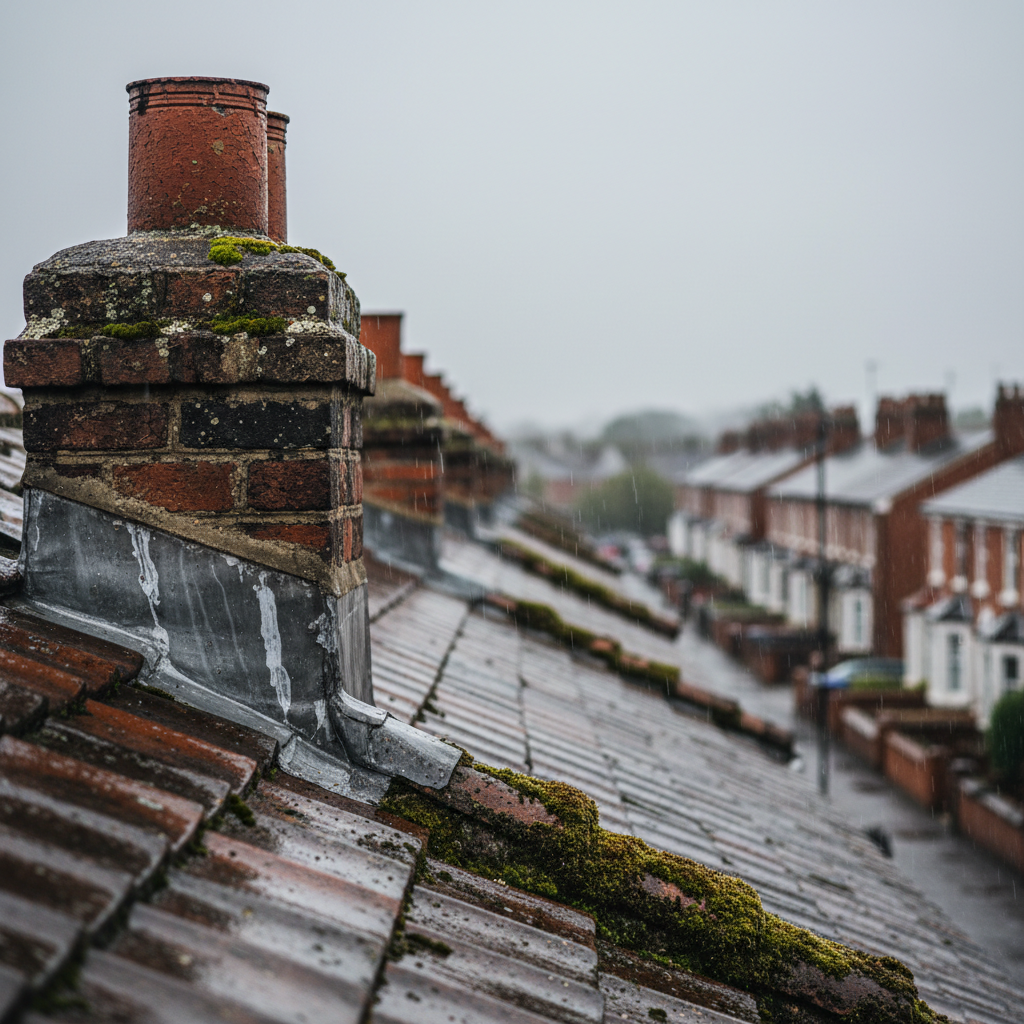
Chimneys are notorious for leaks. You have two different materials meeting: the brickwork of the chimney and the tiles of the roof. They move at different rates when the temperature changes. The lead flashing is there to bridge that gap, but it doesn't last forever.
Over time, the sealant or mortar holding the lead in place can crack. We also see many cases where the lead has simply reached the end of its life. It develops small pinholes or starts to thin out. If you see dampness around the chimney breast inside your house, the flashing is almost always the culprit.
In many older homes in Nottingham and Derby, the original lime mortar has washed away. This leaves the lead loose. A quick patch job with roofing tape might last a month, but it never solves the underlying issue. Proper lead work is a specific skill that requires patience and the right thickness of lead.
Blocked Gutters and Valley Issues
People often forget that the drainage system is part of the roof's health. When gutters get backed up with leaves and moss, the water has nowhere to go. During a heavy downpour, that water can back up under the bottom row of tiles.
Valleys are another high risk area. These are the 'V' shaped metal or fiberglass channels that direct water where two roof slopes meet. Because they handle so much volume, even a small amount of debris can cause a dam.
Common valley problems include:
- Accumulation of moss that holds moisture against the tiles.
- Cracked mortar bedding along the edges of the valley.
- Rusted or split valley liners in older properties.
- Poorly installed transitions where the valley meets the gutter.
If the valley isn't clear, the water will find a way over the edge and straight into your roof space.
Condensation vs. Actual Leaks
Here is something most people miss. Sometimes, the 'leak' isn't a leak at all. In older homes that have recently had new insulation installed, ventilation can become an issue. If the loft isn't breathing, warm air from the house hits the cold underside of the roof felt and turns into water droplets.
This can look exactly like a roof leak. You'll see damp rafters and wet insulation. Before you pay for a roof repair, it's worth checking if your soffit vents are blocked. We've seen many homeowners spend money on tiles when they actually just needed better airflow.
The Importance of Tile Matching
When we do find a leak caused by broken tiles, the biggest challenge is often finding a match. The East Midlands has a huge variety of housing styles, from Victorian terraces to 1970s estates. Using the wrong tile doesn't just look bad. It can cause the roof to sit unevenly, creating new gaps for water to enter.
We spend a lot of time sourcing tiles that match the weight, shape, and profile of the existing roof. If a tile doesn't lock in perfectly with its neighbors, the wind will eventually lift it again. It's about doing the job once and doing it right.
When to Call a Professional
You might be tempted to get on a ladder yourself, but roof work is dangerous and often deceptive. What looks like a simple hole might be a symptom of a larger structural issue. We always recommend a proper inspection if you notice any of these signs:
- Water stains on your ceilings or walls.
- Damp smells in the loft or upper floors.
- Debris or pieces of mortar appearing in your gutters.
- Visible gaps or 'daylight' when looking up from inside the loft.
- Sagging areas on the roofline.
Catching these things early saves a lot of money. A few replaced tiles and some fresh mortar is much cheaper than replacing rotten timber rafters or ruined ceilings. We've been helping homeowners across Leicester, Derby, and Nottingham for two decades, and the most successful repairs are always the ones caught early.
Final Thoughts on Maintenance
Your roof is the most hard working part of your house. It takes the brunt of every storm and every heatwave. While it's easy to ignore it when everything is dry, a little bit of attention goes a long way.
Keep your gutters clear, look up at your tiles after a storm, and don't ignore that small damp spot. In our experience, roofs don't fix themselves. They only get worse. Taking action now ensures your home stays dry and protected for the next twenty years.