
Derby Roof Leaks: Why Flashing is Usually the Culprit
Sam R.·Aug 1, 2026
The Hidden Cause of Most Derby Roof Leaks
When you see a damp patch appearing on your bedroom ceiling, your first instinct is probably to look for a slipped tile. It makes sense. If a tile is gone, water gets in. But after 20 years fixing roofs across Derby and Nottingham, I can tell you that the culprit is rarely the tile itself.
Most of the time, the leak starts at the flashing.
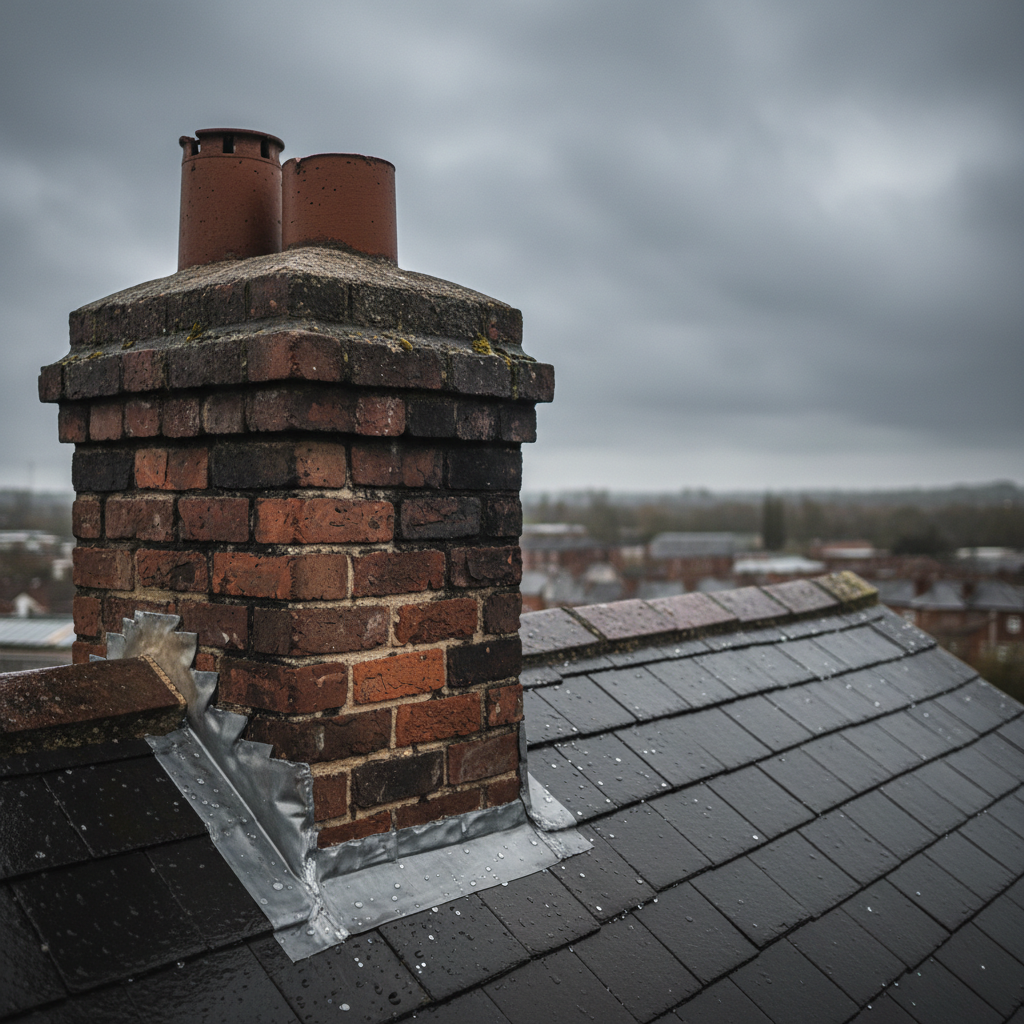
Flashing is that thin material, usually lead or galvanized steel, that sits in the awkward gaps where your roof meets something else. Think chimneys, dormer windows, or where two roof slopes join in a valley. These are the weakest points of any structure. While tiles are great at shedding water, they can't create a watertight seal against a vertical brick wall. That is where flashing comes in.
Why Flashing Fails in the East Midlands
We get a fair bit of weather in Derby. It isn't just the rain that causes problems, it is the constant shifting between damp, cold mornings and occasional bursts of sun. This causes materials to expand and contract. Over a decade or two, that movement takes a toll.
Lead is the gold standard for flashing because it is soft and durable. However, even lead has a lifespan. If it wasn't installed with the right expansion joints, it will eventually crack. Once a hairline fracture forms, the wind drives rain right under the metal. You won't notice it during a light drizzle. You will notice it during those heavy autumn downpours when the water volume is too much for the cracked seal to handle.
Common Flashing Red Flags
I often tell customers to take a quick look at their roof from the garden after a storm. You don't need to be an expert to spot some of these issues.
- Lifted edges: If the metal looks like it is peeling away from the brickwork, the sealant or mortar has failed.
- Cracks and splits: Look for small dark lines in the grey metal, especially in the corners of chimney stacks.
- Missing mortar: The flashing is usually tucked into a brick joint. If that mortar has crumbled away, the flashing is just sitting there loose.
- Staining: Look for white streaks on the tiles below the flashing, which can indicate water is bypassing the metal.
If you see any of these, it is time to get someone out to look at it before that small drip becomes a ruined ceiling.
The Problem With Quick Fixes
I have seen a lot of "DIY" flashing repairs in Leicester and Derby. Usually, it involves a big tub of bitumen sealant or some waterproof tape. Honestly, these are okay for a week if you are waiting for a roofer to arrive, but they are not permanent solutions.
Sealants dry out and peel off within a few months because they cannot handle the thermal movement of the roof. When we come to do a proper roof installation or repair, we often have to spend extra time scraping off these "quick fixes" before we can actually solve the problem. Doing it right the first time involves cutting a new raglet into the brickwork and installing fresh lead that is properly dressed and pointed.
Why Valleys Are Vunerable
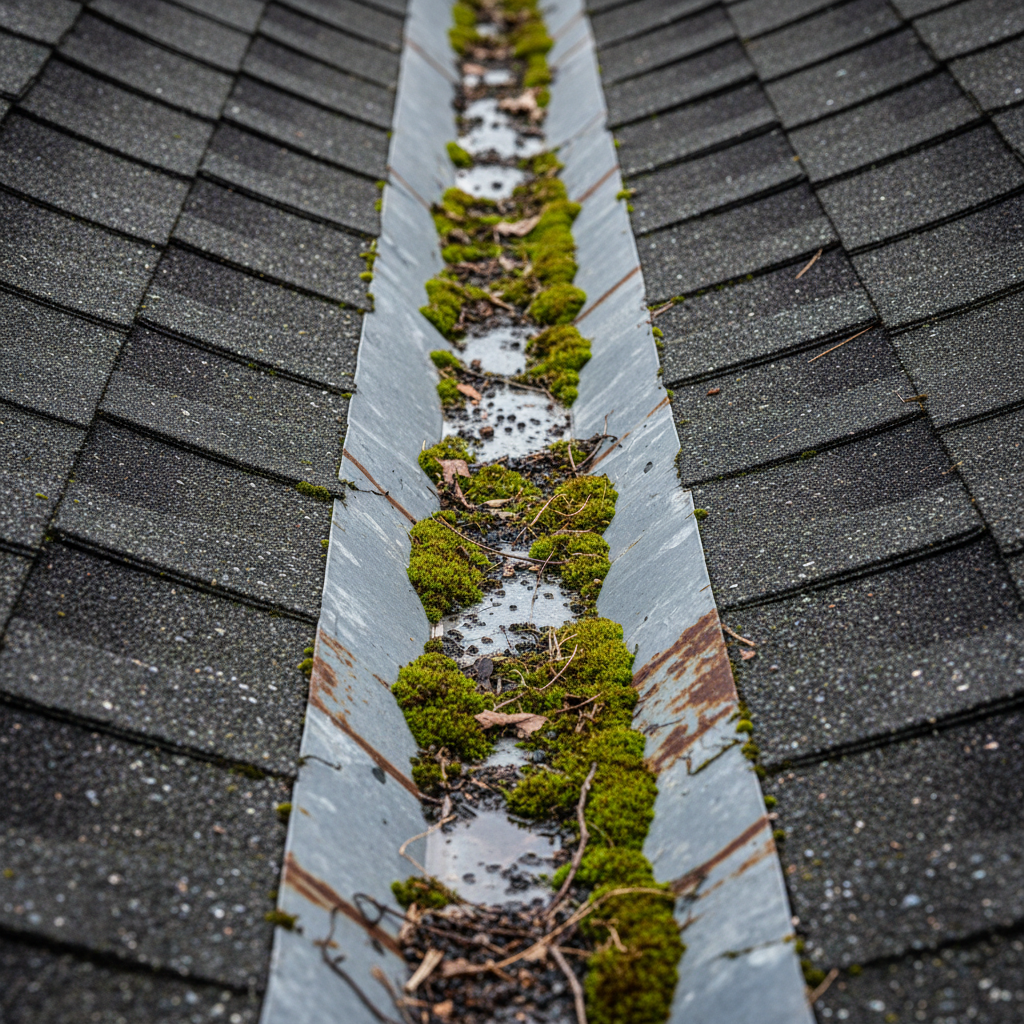
Valleys are the internal angles where two roof faces meet. They act like a gutter, funnelling huge amounts of water down the roof. In many older Derby homes, these valleys are lined with lead or pre-formed metal.
Because so much water travels through here, even a tiny bit of debris can cause trouble. If leaves or moss build up in the valley, they hold moisture against the metal. This accelerates corrosion. If the flashing in a valley fails, you aren't just getting a drip; you are getting a concentrated stream of water entering your attic space.
Matching Tiles and Flashing
When we handle roof tile matching for repairs, we always look at the flashing at the same time. There is no point putting a perfect matching tile back if the lead above it is paper-thin. A roof is a system, and every part needs to work together.
We have spent two decades learning exactly where these systems fail in local homes. Whether you are in a Victorian terrace in Derby or a newer build in Nottingham, the physics of water remains the same. It will always find the path of least resistance.
What to Do Next
If you suspect your flashing is giving up, don't wait for the next big storm. A small repair now is significantly cheaper than a full roof installation later. Most flashing issues can be sorted in a morning if they are caught early enough.
We have seen it all before. We know how to spot the difference between a slipped tile and a failed chimney bond. If you are worried about a damp patch or can see metal lifting on your roof, it is worth getting a professional opinion. We focus on getting the job done right so you don't have to worry the next time the East Midlands weather turns sour.