
Nottingham Roof Tiles: Why They Crack in Winter Freezes
Sam R.·Sep 11, 2026
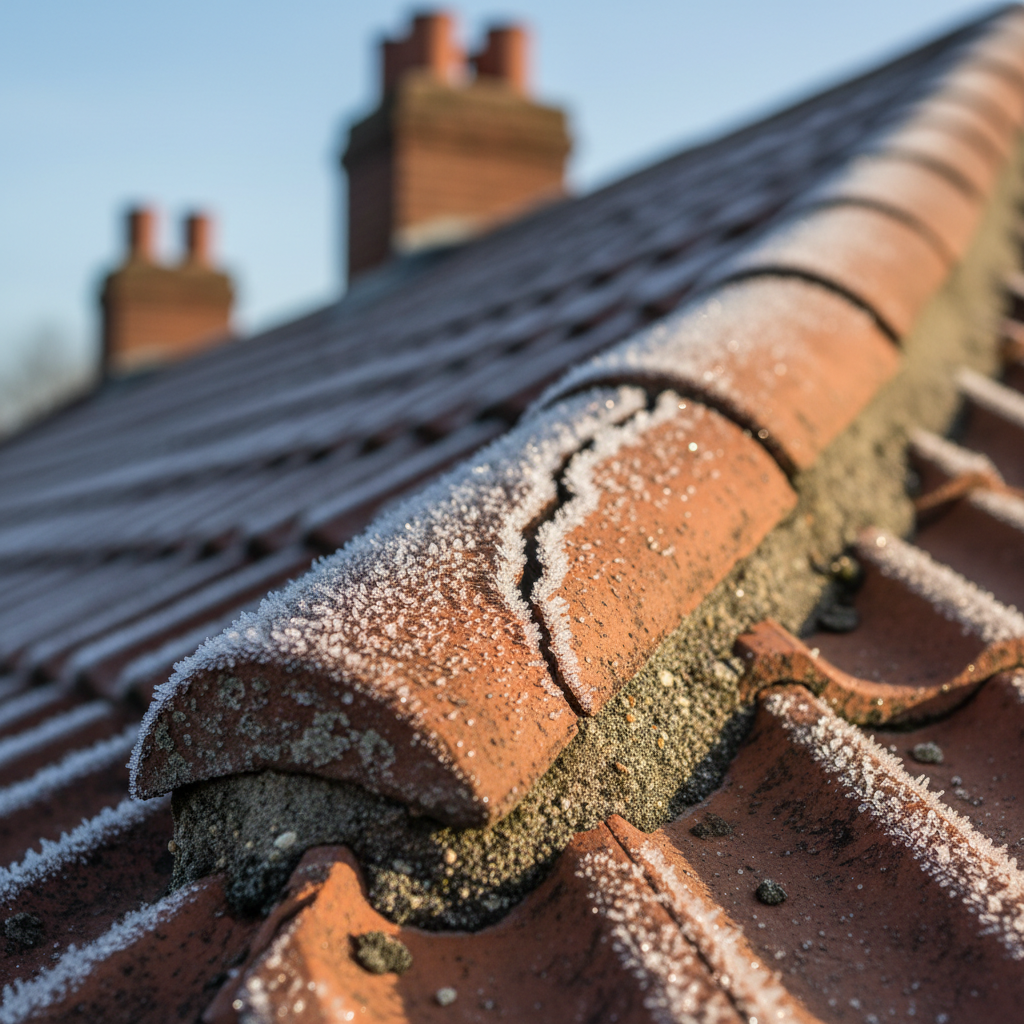
The Reality of Nottingham Winters and Your Roof

Most homeowners in Nottingham don't think much about their roof tiles until a leak appears in the middle of January. By then, the damage is usually done. After spending 20 years looking at roofs across the East Midlands, I've seen a consistent pattern. The issue isn't usually a single storm or a heavy branch. It is the silent, repetitive process of freezing and thawing that slowly destroys even the toughest materials.
Nottingham gets a specific type of damp, cold winter. It isn't just the snow. It's the rain that falls at 3 degrees, soaks into the tiles, and then freezes solid when the temperature drops at 2 AM. This cycle is what causes the hairline fractures that eventually lead to major leaks.
Understanding the Freeze Thaw Cycle
Concrete and clay tiles are naturally porous. They have tiny microscopic holes that are meant to breathe. In a perfect world, water hits the tile and runs straight off into the guttering. In reality, tiles age. The protective glazes wear down, and the surface becomes more absorbent.
When water gets trapped inside the body of a tile and freezes, it expands by about 9 percent. That might not sound like much, but the pressure created inside the tile is immense. It pushes against the structure of the clay or concrete from the inside out. When the sun comes out the next morning, the ice melts, leaving behind a slightly larger gap. The next night, more water fills that gap. Eventually, the tile simply gives up and snaps.
Why Older Nottingham Homes Are More at Risk
If you live in a Victorian terrace or one of the mid-century builds around Wollaton or West Bridgford, your roof has likely faced decades of these cycles. Older tiles have had more time to absorb moisture. The structural integrity isn't what it used to be.
We often see tiles that look perfectly fine from the ground. It is only when we get up on the ladder that we see the 'spalling.' This is where the top layer of the tile starts to flake off like a scab. Once that happens, the tile loses its ability to shed water, and the core of the material is exposed to the elements.
Common Signs of Winter Roof Damage
It is better to spot these issues in November than in February. Here is what we look for when we are out on a site visit:
- Small fragments of orange or grey stone in the gutters.
- Tiles that look 'de-laminated' or have layers peeling off.
- Vertical cracks that run from the top of the tile to the bottom.
- Dark, damp patches on the felt inside your loft space.
- Moss growth that stays wet for days after it stops raining.
That last point is important. Moss acts like a wet sponge. It holds water against the tile for much longer than necessary, giving that water more opportunities to freeze and cause damage.
The Problem with Poor Tile Matching
One mistake I see far too often is when a homeowner tries a quick fix with the wrong materials. Nottingham has a lot of specific local tile styles. If you replace a cracked tile with one that doesn't fit the profile exactly, you create a gap.
That gap allows wind-driven rain to get underneath the tiles. Now, you don't just have water soaking into the tile; you have water sitting on your timber battens and roofing felt. When that water freezes, it can actually lift the tiles up, making the problem even worse. We focus heavily on roof tile matching because a snug fit is the best defense against the freeze-thaw cycle.
Can You Prevent Winter Cracks?
Prevention is mostly about maintenance. You can't stop the weather in the East Midlands, but you can make sure your roof is ready for it. Keeping your gutters clear is the first step. If gutters are blocked, water backs up under the bottom row of tiles, known as the eaves. This area is notorious for rot and freeze damage because the water has nowhere else to go.
We also suggest regular checks for moss. While a bit of green might look rustic, it is a death sentence for older tiles during a hard frost. Removing the moss reduces the amount of moisture sitting on your roof, which directly reduces the risk of cracking.
What to Do if You Find a Cracked Tile
If you notice a crack, don't wait for the spring. A single cracked tile can allow enough water in to rot a roof batten in just one season. Once the batten goes, the surrounding tiles lose their support, and you end up with a much larger repair bill.
Most of the time, we can perform a simple tile replacement that saves the rest of the roof. It is a straightforward job if caught early. We've spent two decades helping people across Derby, Nottingham, and Leicester keep their homes dry, and the most common advice we give is to act fast.
Winter is inevitable, and the frost is going to come. Making sure your tiles are sound and your roof is shedding water properly is the only way to avoid a stressful emergency repair when the temperature drops below zero.