
Nottingham Roof Leak Patterns: What to Check After Storms
Sam R.·Oct 6, 2026

The Reality of Nottingham Storm Damage
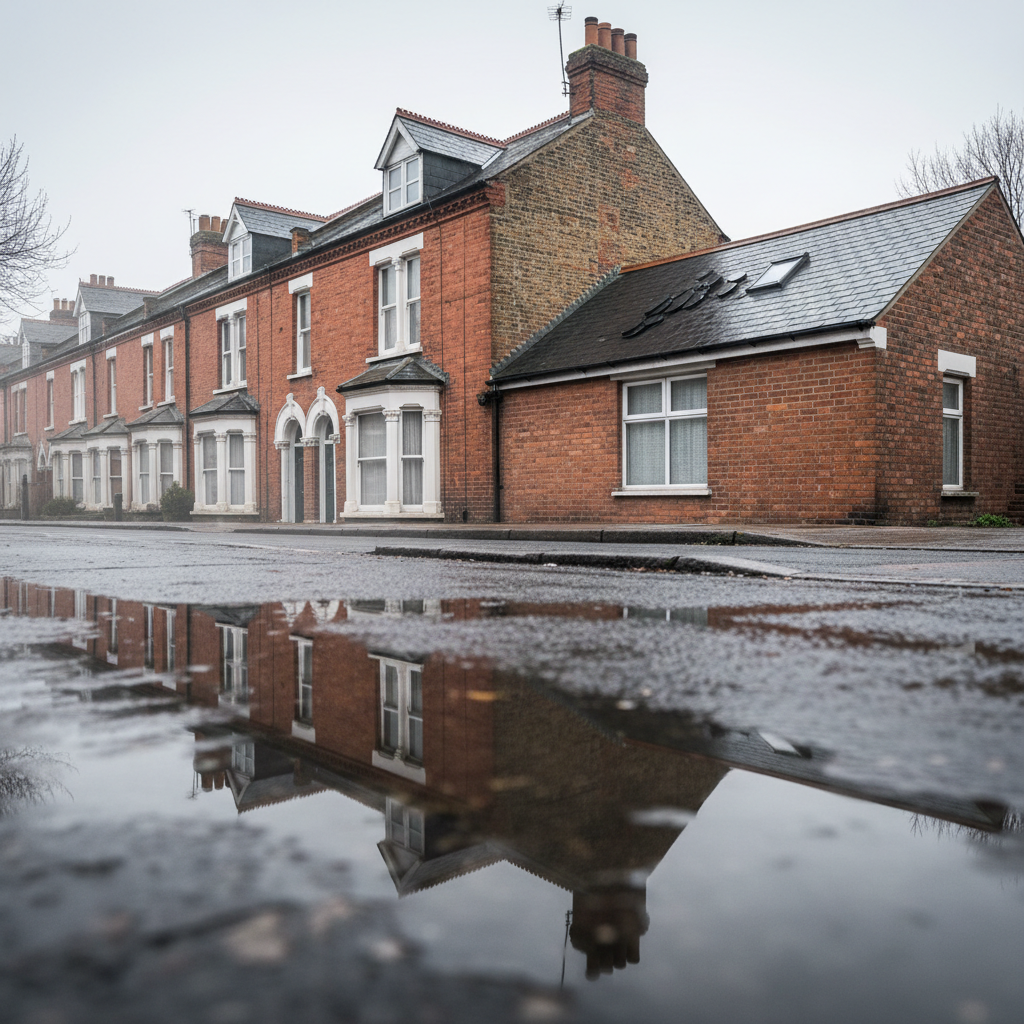
After twenty years of climbing ladders across Derby, Leicester, and Nottingham, we have noticed a clear trend. The storms that roll through the East Midlands do not just bring water. They bring a specific type of pressure that finds the smallest gaps in your home protection. If you live in a Victorian terrace in Sneinton or a newer build in West Bridgford, the patterns of failure are surprisingly consistent.
Most homeowners wait until they see a dark patch on the ceiling to worry. By that point, the water has usually been sitting in your loft insulation for days. Understanding where these leaks start helps you catch them before you need a plasterer and a roofer.
The Ridge Tile Problem
One of the most common calls we get after a heavy gale involves ridge tiles. These are the half-round tiles that sit right at the peak of your roof. In older Nottingham properties, these are often held in place by traditional mortar bedding. Over decades, that mortar cracks and shrinks.
When a storm hits, the wind creates a vacuum effect. It pulls at those loose tiles. Even if the tile stays on the roof, the seal is broken. Rainwater gets driven under the tile and runs straight down the internal timber. We often see homeowners who think they have a leak in their ceiling, but the water actually entered six feet higher up at the ridge.
Why Valley Gutters Fail
If your house has multiple roof pitches meeting at an angle, you have a valley. These are essentially the motorways for rainwater on your roof. During a standard British drizzle, they work fine. During a heavy Nottingham downpour, they get overwhelmed.
Debris like moss and old leaves often settles in these valleys. When the volume of water increases suddenly, the blockage causes water to back up. Instead of flowing into the gutter, it spills over the sides of the lead or fiberglass lining. This is why you might notice a leak only during torrential rain but not during a light shower.
Signs Your Roof Needs Attention
It is worth taking a walk around your garden with a pair of binoculars after the wind dies down. You do not need to be an expert to spot the red flags. Look for these specific issues:
- Tiles that look slightly wonky or out of alignment with the rest of the row.
- Small bits of grey mortar sitting in your gutters or on the patio.
- Patches of moss that have been ripped up and moved.
- Darker, damp-looking patches on your soffits or fascias.
- Visible daylight coming through the felt when you stand in the loft.
The Difficulty of Tile Matching
Nottingham has a huge variety of housing stock. We see everything from heavy clay Rosemary tiles to modern concrete interlocking ones. One mistake we see often is a DIY repair using the wrong tile type.
If the profile does not match exactly, the tiles will not sit flush. This creates a tiny gap. In a storm, that gap is all the wind needs to force water upwards against gravity. We spend a lot of time on roof tile matching because getting the right fit is the only way to ensure the repair actually lasts until the next big storm.
Lead Flashing and Chimney Stacks
Chimneys are a major weak point. The lead flashing that wraps around the base of the chimney is designed to expand and contract. Over time, it pulls away from the brickwork. During a storm, the wind can lift these lead aprons.
If you see water stains on the chimney breast inside your house, the flashing is usually the culprit. It is a common pattern in the older red-brick houses across Nottingham. The mortar joints in the chimney itself can also become porous, allowing water to soak through the bricks and bypass the roof entirely.
Don't Ignore the Drip
Roofing issues do not fix themselves. A small leak after a storm is a warning sign. The timber rafters underneath are not meant to stay wet. If they do, they start to rot, and what was a simple tile replacement becomes a structural headache.
We have seen plenty of situations where a single loose tile caused thousands of pounds in damage because it was left for a full season. The weather in our part of the world is not getting any drier. Taking ten minutes to check your roof after a storm is the smartest maintenance move you can make.