
Flat Roof Repair Derbyshire: A Practical Guide to Fixes
The On the Roofing Team·Sep 16, 2026
Why Flat Roofs Struggle in Derbyshire
Flat roofs get a bad reputation. Most people think they are guaranteed to leak eventually. After 20 years in the trade, I can tell you that isn't true. The problem usually isn't the roof itself, but how it was installed or maintained. In Derbyshire, our weather doesn't help. We get plenty of rain and sharp temperature swings that make materials expand and contract.
If you have noticed a damp patch on the ceiling or a bit of pooling water, you need to act fast. A small leak in a flat roof rarely stays small. Water gets trapped between the layers, rots the decking, and eventually compromises the structure.
Finding the Source of the Leak
Finding a leak on a pitched roof is usually straightforward. You look up, see a slipped tile, and there is your answer. Flat roofs are trickier. Water can enter at one point and travel three metres along the internal timber before it actually drips through your ceiling.
We often start by looking at the most common failure points. These include:
- The Flashing: This is the metal or bitumen strip that connects the roof to the wall. If it pulls away, water runs straight down the brickwork and under the roof membrane.
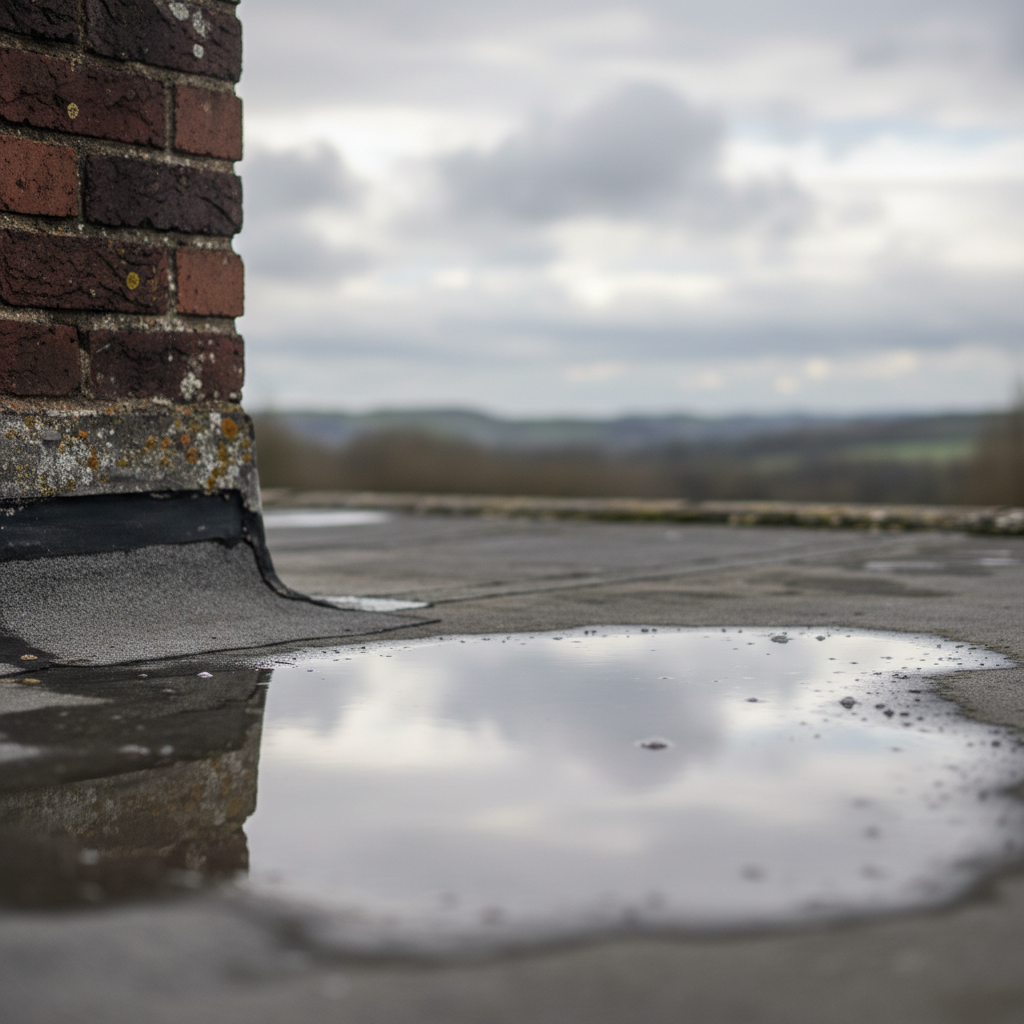
- Ponding Water: If your roof has a dip, water sits there. Over time, the weight and the constant moisture degrade the surface.
- Blistering: This happens when air or moisture gets trapped between layers. On a hot day, it expands and creates a bubble that eventually cracks.
- Impact Damage: Sometimes it is as simple as a fallen branch or someone walking on the roof in the wrong shoes.
Repair vs Replacement
This is the question every homeowner asks. Nobody wants to spend more than they have to. In my experience, a repair is a great short term fix if the rest of the roof is in good condition. If the membrane is supple and the decking feels solid, a patch or a liquid coating can buy you another five to ten years.
However, if the roof is over 20 years old and the surface is cracking everywhere (we call this alligatoring), you are throwing good money after bad. At that point, the material has reached the end of its life. Patching one hole just leads to another appearing two months later.
Modern Materials That Actually Work
If you do need a full replacement or a significant repair, the options have improved massively since the old felt and rag days. We work across Derby, Nottingham, and Leicester, and we see a lot of different setups.
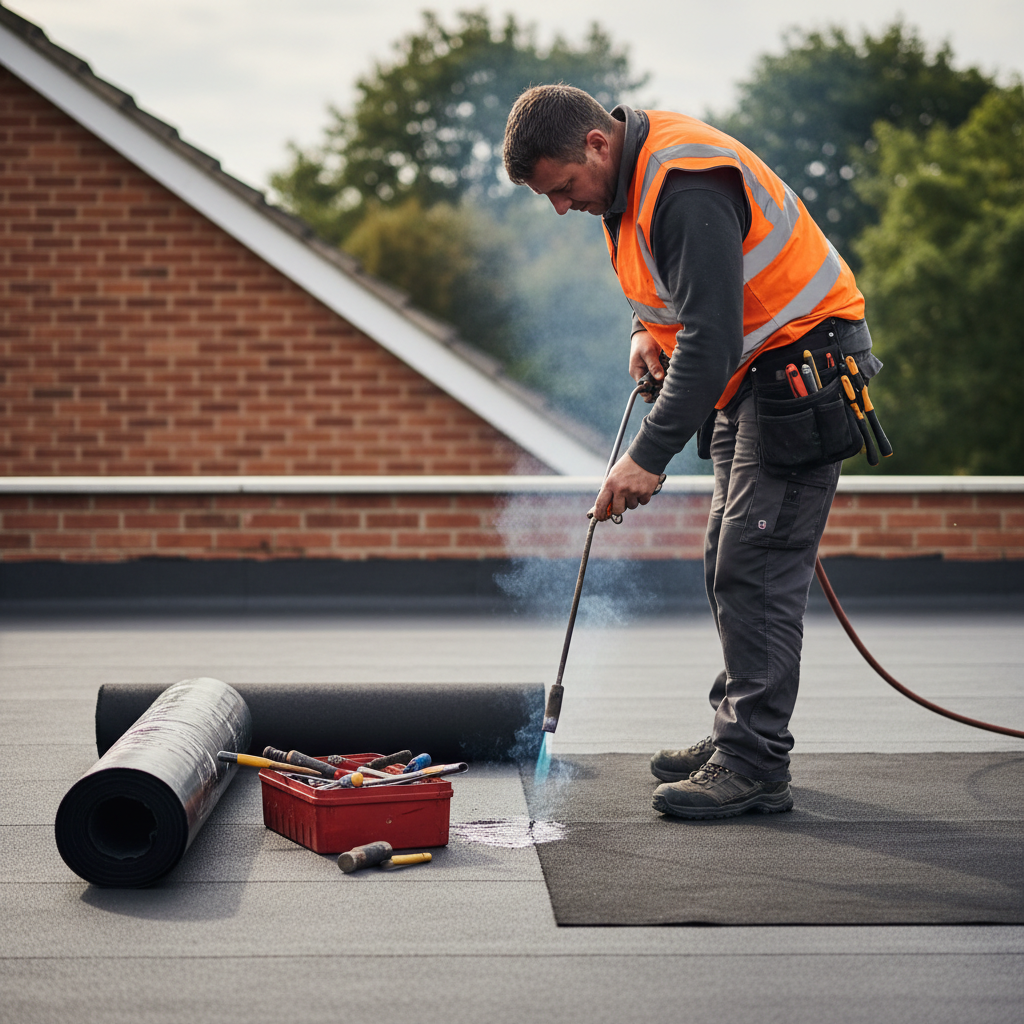
Felt is still popular because it is cost effective. Modern high performance torch-on felt is much tougher than the stuff used in the eighties. It uses multiple layers that create a thick, durable barrier.
EPDM rubber is another favorite. It comes in large sheets, which means fewer seams. Since leaks usually happen at the seams, having a single piece of rubber over your entire garage or extension is a huge advantage. It is also very flexible, so it doesn't crack when the Derbyshire weather turns cold.
GRP Fibreglass is the heavy duty option. It is applied as a liquid and cures into a single solid sheet. It is incredibly tough. If you need to walk on your roof to clean windows or maintain the house, GRP is usually the way to go. It looks clean and comes in various colours, which helps with kerb appeal.
The Importance of Roof Tile Matching
Even on a flat roof, aesthetics matter. Many flat roofs in Derbyshire are bordered by pitched sections or lead into the main house tiles. We focus heavily on roof tile matching for these transition areas. Using the wrong profile or colour of tile where the flat roof meets the main house looks messy. It can also create drainage issues if the tiles don't sit flush against the new flashing.
What to Do While You Wait for a Roofer
If you have water coming into the house right now, don't panic, but don't ignore it. Put a bucket under the drip. If the ceiling is bulging, you might actually need to poke a small hole in the plaster to let the water out. It sounds counterintuitive, but it prevents the entire ceiling from collapsing under the weight of trapped water.
Don't get on the roof yourself if it is wet or if you aren't sure about the structural integrity. A waterlogged roof deck can be deceptively weak.
Choosing a Local Expert
There are plenty of people with a van and a ladder who claim to fix roofs. The difference with an experienced team is the diagnosis. A quick smear of silicone over a crack isn't a repair; it is a temporary bandage that will fail in the next storm.
We have spent two decades working on homes in Derby and the surrounding areas. We know the local building styles and the common problems that crop up in this part of the country. We focus on doing the job once and doing it right.
Final Thoughts on Maintenance
Once your repair is done, keep an eye on your gutters. Blocked gutters are the number one cause of flat roof failure. When the water can't get away, it backs up onto the roof, finds a weak spot in the flashing, and starts the whole cycle again. A quick clear out every autumn can save you thousands in repair bills later on.