
Derby Roof Inspections: Why Rain Checks Save Money
Sam R.·Aug 20, 2026
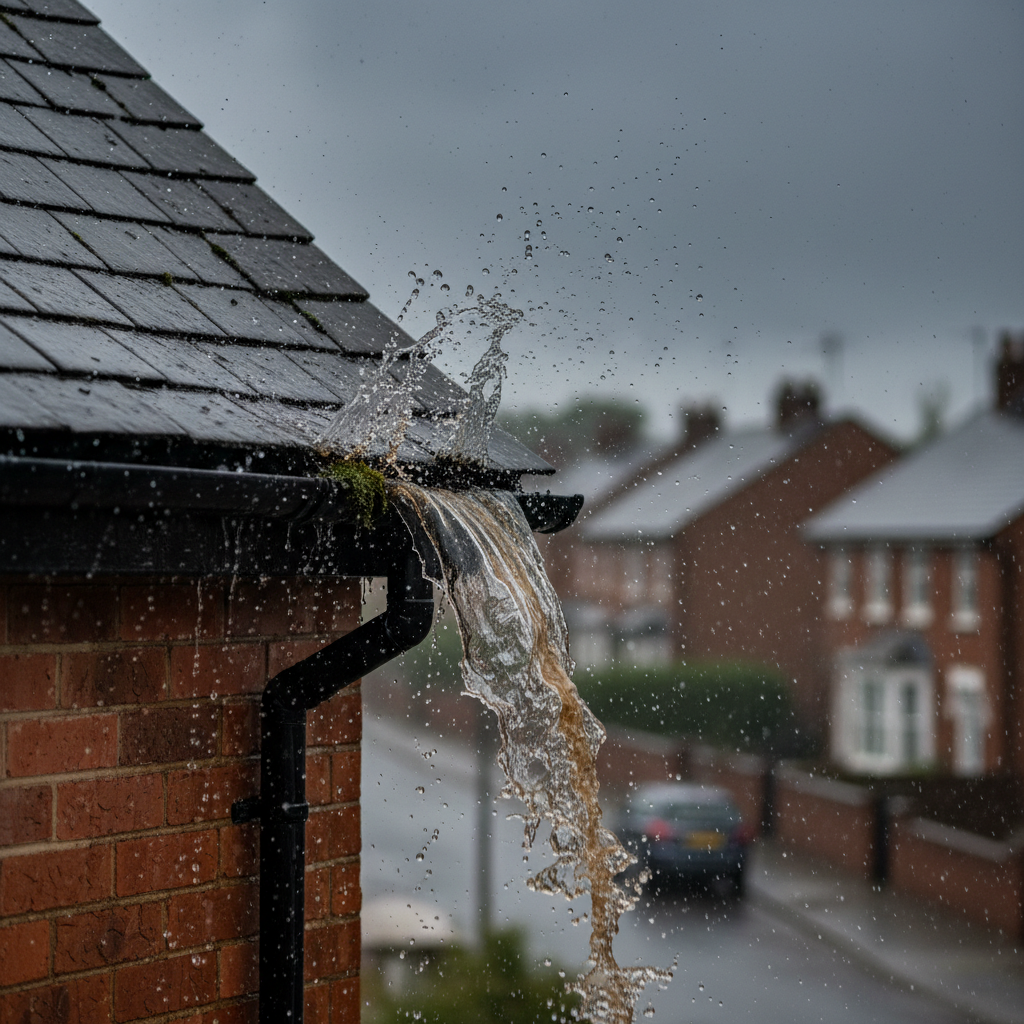
The Morning After the Storm
We have all been there. You wake up in Derby after a night of relentless rain, look out the window at the puddles, and hope for the best. Most homeowners assume that if they don't see a bucket-worthy leak in the living room, the roof did its job.
In my 20 years of experience, I've found that the biggest problems don't start with a splash. They start with a damp patch in the corner of the loft that you won't notice for three months. By then, the timber is soft and the repair bill has doubled.
Rain is the ultimate stress test for your home. It finds the tiny gaps that wind and sun leave behind. If you live in Derby, Nottingham, or Leicester, you know our weather isn't exactly predictable. Taking twenty minutes to look at your roof after a downpour can save you thousands of pounds down the line.
Why Small Leaks Are Deceptive
Water is persistent. It doesn't always fall straight down. It travels along rafters, follows electrical cables, and soaks into insulation. A leak in your kitchen ceiling might actually be coming from a slipped tile three meters away on the opposite side of the house.
When we go out for roof leaks, the most common thing we hear is, "It only drips when the rain hits at a certain angle." That is a huge red flag. It means the secondary defense, usually your roofing felt, is already failing. Once the felt is gone, the water is hitting your ceiling boards directly.
What to Look for from the Ground
You don't need to get on a ladder to spot trouble. In fact, I usually advise against it unless you have the right safety gear. You can see about 80% of potential issues just by walking around your garden with a pair of binoculars or a good phone camera.
Look for these specific warning signs:
- Slipped or Cracked Tiles: Even a single missing tile exposes the underlay to UV rays and heavy water flow, which it isn't designed to handle long-term.
- Debris in the Gutters: if you see bits of grey grit or chunks of clay in your downpipes, your tiles are deteriorating.
- Sagging Gutters: Heavy rain puts immense weight on your guttering system. If the brackets are loose, the water will overflow and soak into your external masonry instead of draining away.
- Chimney Flashing Gaps: The metal leadwork around your chimney is a common failure point. If it looks lifted or warped, water is getting in.
The Loft Check: Your Early Warning System
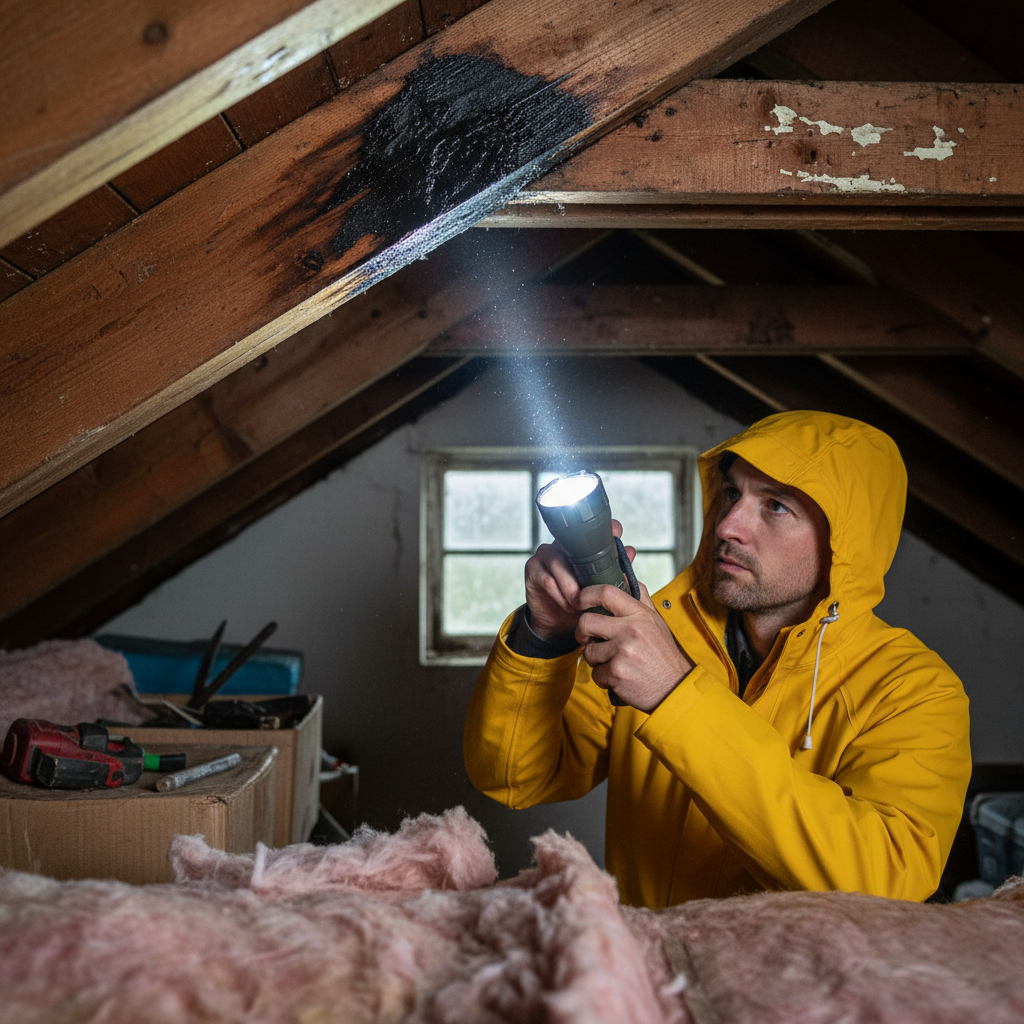
If it is safe to do so, pop your head into the loft while it is still raining or shortly after. Don't turn the light on immediately. Use a torch.
Look for the "glint." Water reflects light. If you see a shine on the rafters or the back of the felt, you have a problem. Check the insulation too. If it feels heavy or clumped in one area, it is likely absorbing moisture. Damp insulation loses its ability to keep your house warm, so you end up paying more for heating while your roof rots. It is a lose-lose situation.
Why Derby Homes Face Unique Challenges
Derby has a lot of beautiful older properties, especially around areas like Mickleover or the city center. These homes often have original clay tiles. While these tiles look fantastic, they can become porous over twenty or thirty years. During a heavy storm, they soak up water, become incredibly heavy, and can crack under the weight or stress of the wind.
We also see a lot of issues with roof tile matching. When a storm hits, a homeowner might try a DIY fix with whatever tile they find at a local yard. If the interlock doesn't match perfectly, the rain will blow right under the gap. We specialize in roof tile matching to ensure the repair actually seals the roof rather than just covering the hole.
The Cost of Waiting
I often tell people that a roof repair is like a toothache. It never gets better on its own, and it never gets cheaper. A quick inspection might reveal that you just need a few tiles re-seated or a small patch of pointing on the ridge. That is a quick, affordable job.
If you wait until the ceiling starts to sag or black mold appears in the bedrooms, you aren't just looking at a roof repair. You are looking at new plasterboard, new insulation, and potentially new structural timbers. In the worst cases, a neglected leak leads to a full roof installation much sooner than necessary.
Getting a Professional Opinion
Sometimes, the signs aren't obvious to the untrained eye. If your house is over 15 years old and has just weathered a particularly nasty Derby storm, it is worth having a professional take a look. We have spent two decades identifying the subtle patterns of water ingress.
We don't just look at the hole; we look at why the water got there. Is it a design flaw? Is it age? Is it recent wind damage? Understanding the cause is the only way to make sure the repair actually lasts until the next big storm.
Final Thoughts
Don't let a rainy night turn into a financial headache. Take a walk around your property this afternoon. Check the gutters, look at the ridgeline, and if you see anything that looks slightly off, give us a shout. It is always better to be told your roof is fine than to find out it isn't when the water is coming through the light fittings.