
Roof Leak Signs: Identifying Damage in Midlands Homes
The On the Roofing Team·Sep 30, 2026
Spotting Roof Issues Before They Get Expensive
Most homeowners in Derby, Nottingham, and Leicester live in properties built between the late Victorian era and the 1950s. While these houses were built to last, their roofs weren't meant to be immortal. After 20 years of working on these specific local structures, we've noticed that most people don't realise they have a leak until they're literally putting a bucket under a drip.
By that point, you aren't just paying for a roof repair. You're paying for new plasterboards, ceiling paint, and potentially dealing with timber rot. The trick is catching the signs early when the problem is still just a slipped tile or a bit of failed flashing.
The Telltale Signs Inside Your Attic
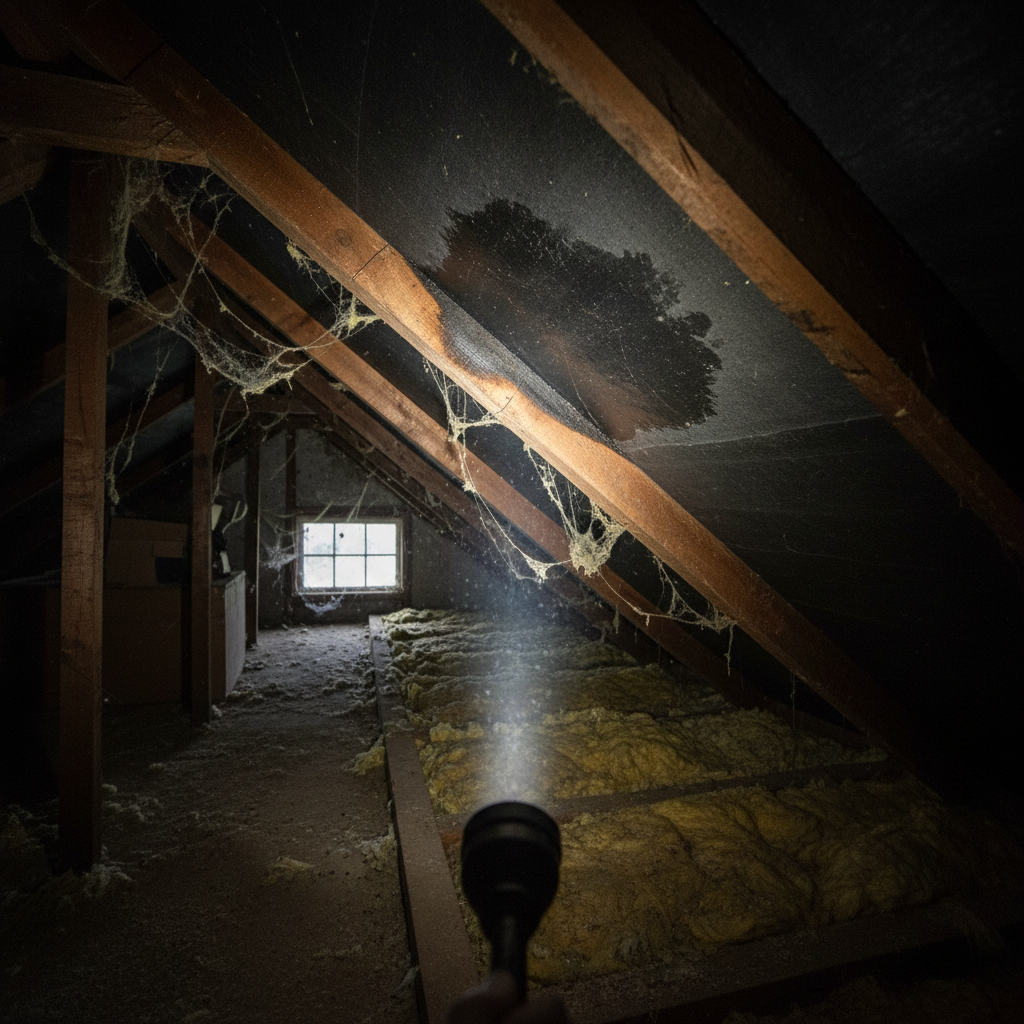
If you suspect a problem, the loft is the first place to look. You don't need to be an expert to spot the red flags. Grab a torch and head up there on a rainy day.
Look for dark staining on the rafters. If the wood looks damp or has a white, salty crust on it, water is getting in. In older Midlands homes, we often see 'nail sickness.' This happens when the old iron nails holding tiles in place rust away. The tile slips just an inch or two, and suddenly, you have a direct path for rainwater to enter your home.
Check the insulation too. If it feels heavy or looks flattened in specific spots, it's likely soaking up water like a sponge. This is dangerous because wet insulation loses its ability to keep your house warm and can lead to mould growth that spreads through your ceiling.
External Clues You Can See from the Garden
You don't need to get on a ladder to check the health of your roof. A quick walk around your garden with a pair of binoculars can tell you a lot.
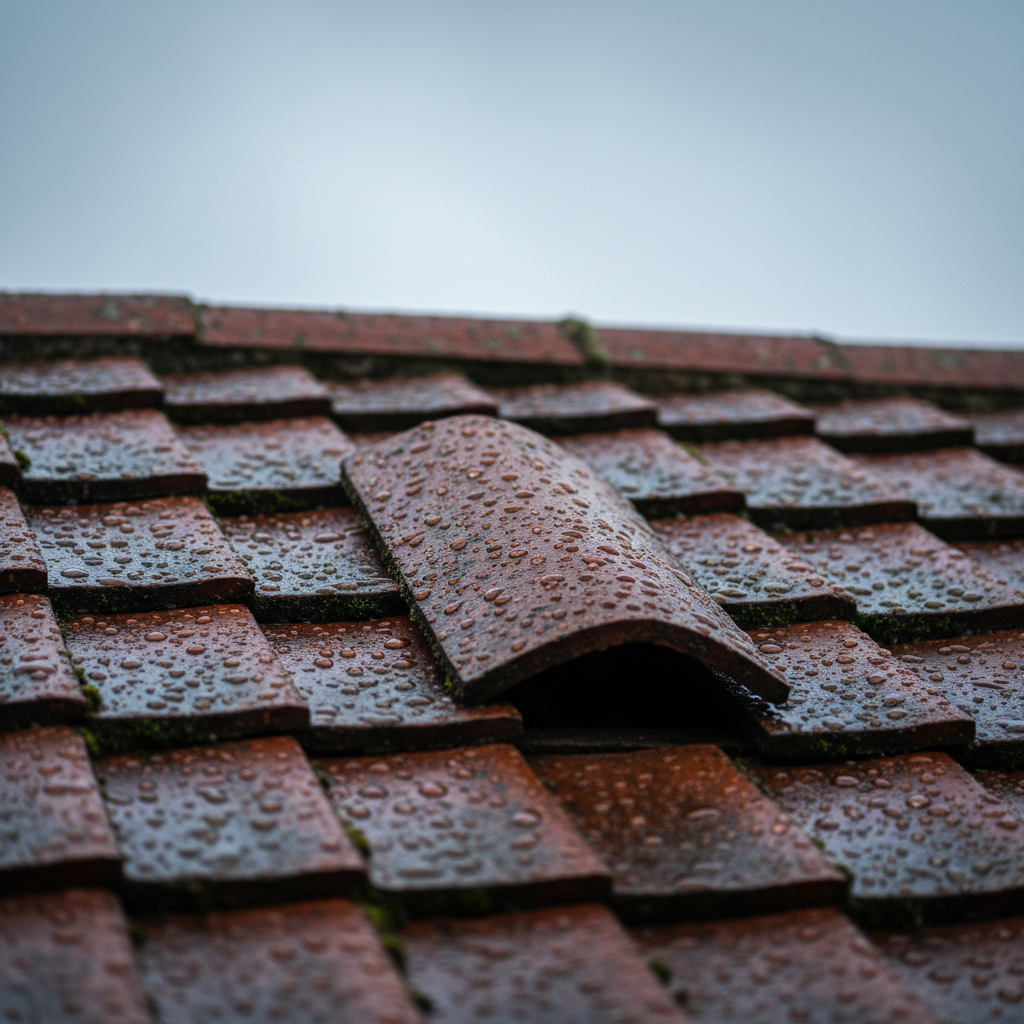
Look at the roofline. Are there any tiles that look out of place? Even one missing tile can let in hundreds of litres of water during a typical East Midlands downpour.
Pay close attention to these specific areas:
- The Valleys: These are the 'V' shaped channels where two roof slopes meet. They carry a lot of water. If they're blocked with moss or the lead lining has cracked, you'll get a leak.
- Chimney Flashing: The lead work around your chimney is a common failure point. Over time, the mortar holding the lead in place crumbles, allowing water to run down the side of the chimney stack and into your bedrooms.
- Moss Growth: While a bit of moss looks characterful, heavy clumps act like a sponge. They hold moisture against the tiles and can cause them to crack when the temperature drops and the water freezes.
- Guttering: If you see grass or weeds growing out of your gutters, they're blocked. Blocked gutters cause water to back up and flow under the bottom row of tiles, rotting your fascia boards.
Why Roof Tile Matching Matters
One thing we pride ourselves on is roof tile matching. In cities like Leicester and Nottingham, many homes use specific Rosemary tiles or local clay varieties that aren't made the same way anymore.
When a leak is caused by a broken tile, some builders just throw on whatever they have in the van. This looks terrible and, more importantly, these tiles often don't interlock properly with your existing roof. This creates gaps that lead to more leaks down the line. Using the correct profile and material ensures the patch is watertight and invisible.
The Damp Patch Myth
Many people think a leak will always show up as a brown circle on the ceiling directly below the hole in the roof. In reality, water is sneaky. It often enters at the ridge, runs down a rafter, travels along a ceiling joist, and finally drips onto your plasterboard three metres away from the actual hole.
If you see dampness in the corner of a room or along a chimney breast, don't assume the leak is right there. It requires a bit of detective work to trace the path back to the source. This is where 20 years of experience comes in handy. We've seen water travel in ways that defy common sense, but there's always a logic to it once you find the entry point.
Don't Ignore the Musty Smell
Sometimes you can't see a leak, but you can smell it. If your upstairs rooms or your loft have a persistent musty, earthy scent, it's a sign of trapped moisture.
In older homes, ventilation was often achieved through natural gaps in the construction. When we add modern insulation and double glazing, we sometimes trap moisture inside. However, if that smell gets stronger after a storm, it's almost certainly a leak. Damp timber and wet insulation have a very specific, unpleasant odour that shouldn't be ignored. Over time, this moisture leads to dry rot, which is a much more expensive problem to fix than a simple roof leak.
What to Do Next
If you've noticed any of these signs in your Derby, Nottingham, or Leicester home, the best thing to do is act quickly. A small leak today is a manageable repair. A leak left for six months can become a full roof installation project.
We focus on finding the source of the problem and providing a long term fix rather than a quick patch that will fail in the next gale. Whether it's matching rare old tiles or resealing a chimney stack, getting it right the first time saves you a lot of stress and money in the long run.